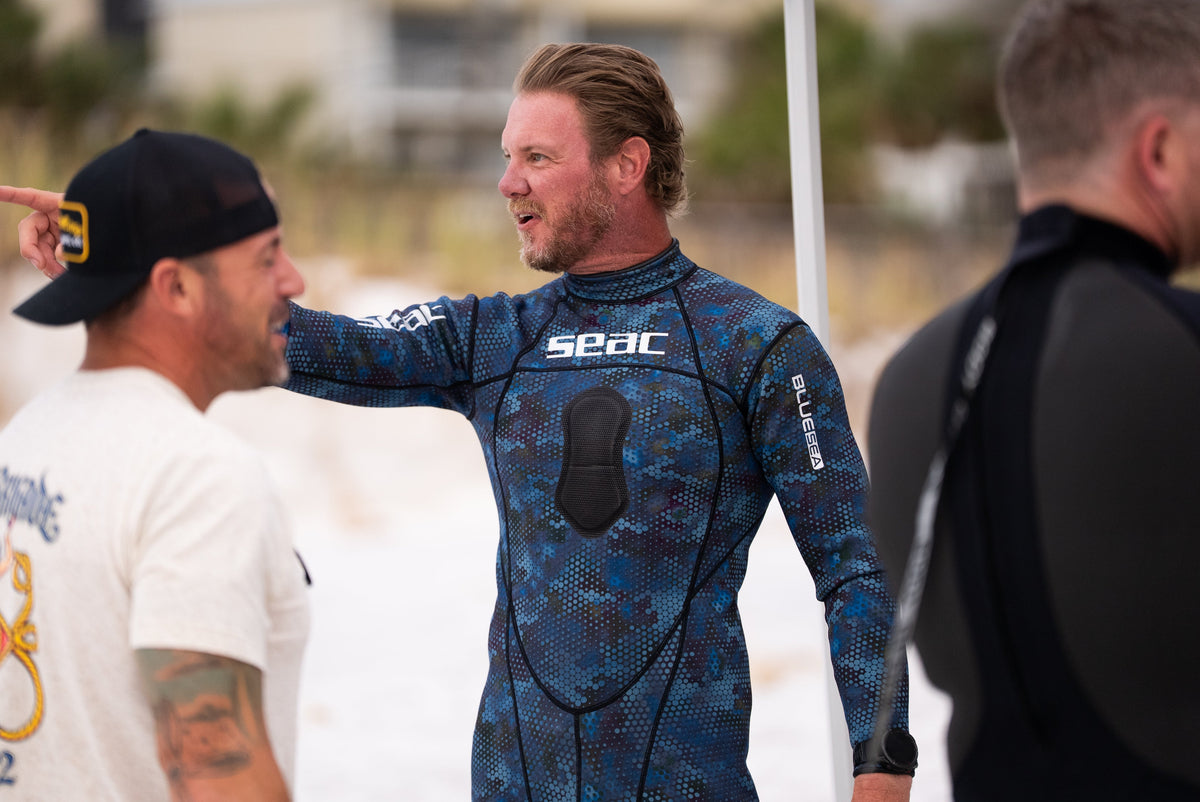
Every Surf Brigade session starts on the sand, before anyone touches the water. We read the conditions, point out the lineup and the currents, and make sure everyone knows the plan. Here is the same safety briefing, for anyone heading to a Florida Gulf beach.
What the Beach Flags Mean
Florida adopted a uniform beach warning flag system in 2005, so the colors mean the same thing on every public beach that uses them:
- Green: low hazard. Calm conditions, but still use caution.
- Yellow: medium hazard. Moderate surf and/or currents.
- Red: high hazard. High surf and/or strong currents.
- Double red: the water is closed to the public. In some counties, entering the water on a double red day is against the law.
- Purple: dangerous marine life, such as jellyfish or stingrays. It can fly alongside any of the other colors.
One more rule: no flag does not mean safe water. Always check conditions yourself and swim near a lifeguard when you can.
Rip Currents: The Biggest Danger in the Surf
Rip currents are channels of water flowing away from shore. They can form on any beach with breaking waves, including the Gulf. According to NOAA, they usually move one to two feet per second, but some have been measured at eight feet per second, faster than an Olympic swimmer.
The good news: a rip current does not pull you under. It pulls you out.
How to spot one
- A gap in the line of breaking waves
- A channel of darker, choppy or churning water
- A line of foam, seaweed or debris moving steadily away from shore
Sometimes none of these signs are visible, which is why checking flags and asking a lifeguard matters.
What to do if you are caught
- Stay calm and float. Fighting the current will only tire you out.
- Swim parallel to the shore, not straight back to the beach. NOAA notes most rip currents are less than 80 feet wide.
- Once you are out of the pull, swim back at an angle, using the waves to help push you in.
- If you cannot get out, float or tread water, face the shore, wave your arms and yell for help.
If you see someone else in trouble
Get a lifeguard or call 911. Throw them something that floats, like a cooler, a ball or a boogie board, and yell instructions to swim parallel to shore. Too many people drown trying to rescue others. Do not become a second victim.
Our Crew's Simple Rules
- Never surf or swim alone.
- Check the flags and forecast before you go.
- If in doubt, stay out.
- Know your limits, and respect the ocean on every single day.
Learn With People Who Have Your Back
Surf Brigade sessions always have experienced coaches in the water watching every rider. Nobody paddles out alone. If you are a veteran who wants to learn to surf safely, get in touch with us. It is completely free for veterans.